Apple's abstract
Graphics resources are virtualized through an interface between graphics hardware and graphics clients. The interface allocates the graphics resources across multiple graphics clients, processes commands for access to the graphics resources from the graphics clients, and resolves conflicts for the graphics resources among the clients.
Background of the invention
A graphics kernel driver typically interfaces between graphics client drivers and graphics hardware to assign graphics resources to each client driver and to administer the submission of graphics commands to the graphics hardware. Each client driver has explicit knowledge of the graphics resources it is assigned and references the resources in its commands using the physical address of the resources. As more sophisticated graphics features are developed, the demand for graphics resources is ever increasing but the graphics resources are limited by the graphics hardware and other system constraints. The assigned resources cannot be shared among clients because the graphics hardware is not designed to handle resource contention among the clients. Additionally, the client drivers are required to manage their own internal resource conflicts. For example, they must handle their attempts to use more than available graphics memory.
Summary of the invention
Graphics resources are virtualized through an interface between graphics hardware and graphics clients. The interface allocates the graphics resources across multiple graphics clients, processes commands for access to the graphics resources from the graphics clients, and resolves conflicts for the graphics resources among the clients.
In one aspect, the interface is a graphics kernel that assigns an identifier to a resource when allocated by a graphics client and the client uses the identifier instead of an address for the resource when requesting access to the resource.
Because the native command structure for the graphics hardware is unaffected by the virtualization, neither the applications nor the hardware require modification to operate in conjunction with the present invention. Furthermore, because the virtualized resources appear as unlimited resources to the graphics clients, the clients can be simplified since, for example, they are no longer required to de-fragment or compact their assigned resources.
The present invention describes systems, methods, and machine-readable media of varying scope. In addition to the aspects of the present invention described in this summary, further aspects of the invention will become apparent by reference to the drawings and by reading the detailed description that follows.
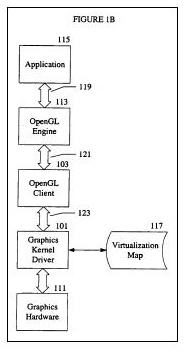
About FIG 1B: Referring to an exemplary embodiment shown in FIG. 1B, the kernel driver 101 manages the allocation of memory among clients through a virtualization map 117, such as a range allocation table. The virtualization map 117 indicates how graphics memory is currently allocated, including which block a client is using.
Notice
Macsimum News presents only a brief summary of patents with associated graphic(s) for journalistic news purposes as each such patent application and/or grant is revealed by the U.S. Patent & Trade Office. Readers are cautioned that the full text of any patent applications and/or grants should be read in its entirety for further details. This patent report relates to application number[url=http://appft1.uspto.gov/netacgi/nph-Parser?Sect1=PTO2&Sect2=HITOFF&u=%2Fnetahtml%2FPTO%2Fsearch-adv.html&r=1&f=G&l=50&d=PG01&p=1&S1=20060152518&OS=20060152518&RS=20060152518]20060152518[/url].
The inventors listed on this patent application included John Stauffer, Bob Beretta and Ken Dyke.
neo@macsimumnews.com










